
Custom Jewelry Product Development
Custom Jewelry Product Development for Production-Ready Designs
Turn a defined jewelry concept, sketch, CAD file, reference, or existing sample into a technically resolved product ready for prototyping, approval, and manufacturing.
Luora supports jewelry brands and designers through feasibility review, design engineering, material alignment, sample refinement, and production preparation.
Is Custom Jewelry Development the Right Route for Your Project?
Custom jewelry development is intended for projects that already have an identifiable product direction but still require technical refinement before production.
You do not need to begin with a complete technical package. We can review and develop projects based on:
The purpose of this service is to resolve the practical decisions that sit between an initial design and an approved, production-ready jewelry product.
-
01
A defined jewelry concept
-
02
A hand-drawn sketch
-
03
Reference images
-
04
An existing jewelry sample
-
05
A CAD or 3D file
-
06
Preliminary dimensions or material requirements
-
07
A current product that needs structural improvement
If you only have a broad brand idea, target market, or collection theme and need Luora to participate more deeply in product direction, ODM jewelry development may be the more suitable route. Projects focused primarily on visual language, symbolism, form, and creative direction should begin with our jewelry design services. Designs that are already fully approved can move directly into OEM jewelry manufacturing.
Identify Production Challenges Before They Reach the Sample Stage
Feasibility Review Before Development Begins
A jewelry design can look convincing on paper while still presenting problems in weight, structure, stone setting, assembly, or repeatability. Early feasibility review helps identify these issues before time and resources are committed to sampling.
Depending on the product, our review may consider:
- Compatibility between the intended materials and product structure
- Overall dimensions, scale, and target weight
- Metal thickness and structural support
- Stone size, placement, and setting method
- Connections between jade, gemstones, and metal components
- Clasps, hinges, links, and other moving parts
- Wearing balance and contact with the body
- Access for polishing, finishing, and assembly
- Repeatability during batch manufacturing
- How design decisions may affect development complexity and cost
When an adjustment is needed, the goal is not to replace the original design identity. It is to find a practical solution that preserves the intended appearance and meaning while improving manufacturability.
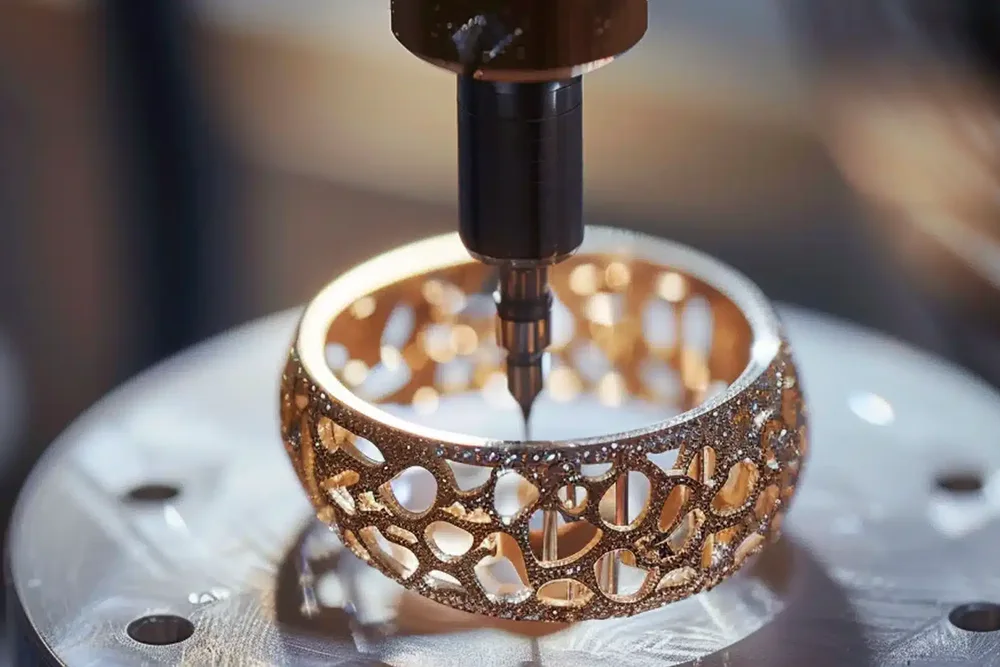
Our Custom Jewelry Product Development Process
A Structured Path From Defined Concept to Approved Sample
-
01
Project Input Review
We begin by reviewing the available sketches, references, CAD files, samples, dimensions, material preferences, and intended product use. This establishes the scope of the development work and identifies missing decisions.
-
02
Technical Feasibility Assessment
The proposed structure, materials, proportions, setting methods, connections, and finishing requirements are evaluated for practical manufacturing. Potential risks are discussed before detailed development proceeds.
-
03
Design and Structure Refinement
Dimensions, thicknesses, connections, settings, closures, and other functional details are refined where necessary. Adjustments are made with the product’s visual identity, comfort, durability, and intended price position in mind.
-
04
CAD and Specification Development
The confirmed direction is translated into a more precise technical model or production reference. CAD development focuses on the geometry, dimensions, component relationships, and construction needed for prototyping.
-
05
Material and Craft Alignment
Relevant materials, stones, decorative elements, surface treatments, setting methods, and assembly requirements are aligned with the design. Natural materials may require additional consideration for color, texture, shape, and variation.
-
06
Prototype and Sample Review
A prototype or physical sample is used to evaluate the design outside the digital environment. Proportions, weight, comfort, movement, setting, finishing, and assembly details can then be reviewed and refined.
-
07
Final Approval and Production Handoff
Once the product meets the agreed requirements, the final design direction, sample, materials, and production details are confirmed. The project can then proceed to quotation, MOQ confirmation, scheduling, and manufacturing.
Resolving the Details That Influence Product Performance
Design Engineering for Reliable, Repeatable Production
Custom jewelry product development requires more than reproducing the appearance of a drawing. The product must also work as a physical object and remain consistent when manufactured beyond the first sample.
Structural Integrity
Metal thickness, supporting areas, stone seats, links, joints, and attachment points must be suitable for the intended product and normal handling.
Wearability and Balance
Weight distribution, contact surfaces, pendant orientation, bracelet movement, closure position, and overall scale can affect how a piece feels and behaves when worn.
Material Transitions
Products combining sterling silver, jade, gemstones, beads, or decorative components require carefully considered connections. The structure must hold each material securely without weakening its visual character.
Production Repeatability
A successful sample must represent a product that can be reproduced with reasonable consistency. Component relationships, assembly logic, finishing access, and acceptable material variation should therefore be considered during development rather than after production begins.
Evaluate the Product in Its Physical Form
Prototype and Sample Validation
A prototype or sample provides information that cannot always be judged from a sketch or rendering. It allows the design to be handled, worn, inspected, and compared with the original intention.
Sample evaluation may include:
- Overall scale and visual proportion
- Actual product weight
- Wearing comfort and balance
- Closure and moving-component performance
- Stone or decorative-element placement
- Jade and metal connections
- Surface finish and edge treatment
- Assembly quality
- Alignment between the sample and approved design
Not every project requires the same number of revisions. A simple dimensional adjustment may be resolved quickly, while a new structure or mixed-material design may require further evaluation. Revisions should address specific findings rather than continue without a clear approval standard.
Confirm the Product Before Manufacturing Resources Are Committed
Production-Ready Development Deliverables
A visually attractive sample is only one part of production readiness. The decisions needed to reproduce the product should also be aligned and recorded.
Depending on the project scope, final confirmation may include:
- Approved design direction
- Confirmed CAD model or technical reference
- Product dimensions and proportions
- Metal and material specifications
- Jade, gemstone, or moissanite requirements
- Setting and assembly methods
- Surface finish and decorative details
- Approved physical sample
- Agreed production notes
- Project-specific quotation, MOQ, and production schedule
The exact document and sample package depends on the design and the agreed development scope. The objective is to remove avoidable ambiguity before the project enters bulk manufacturing.
Development Decisions Adapted to the Product and Material
Materials We Can Develop
Luora supports product development across its core jewelry categories. Each material creates different structural, visual, and manufacturing considerations.
925 Sterling Silver Jewelry
Development may involve weight control, metal thickness, component construction, stone setting, surface finish, and polishing requirements.
Jade and Silver Jewelry
Hetian jade and other natural jade materials require thoughtful connections, protective structures, and suitable proportions. Natural color, texture, and shape variation must also be considered.
Gemstone and Moissanite Jewelry
Stone dimensions, placement, setting style, surrounding metal, and visual balance are coordinated as part of the product structure.
Symbolic Jewelry and Premium Gifts
Cultural symbols, meaningful forms, and brand elements are translated into jewelry details that retain their intended meaning while remaining practical to produce.
Move Forward With a Clear, Approved Product
Handoff to OEM Jewelry Manufacturing
Custom jewelry development concludes when the design, materials, construction, and sample have been sufficiently resolved for production planning.
The approved project can then move into:
- Production quotation
- MOQ confirmation
- Manufacturing scheduling
- Material preparation
- OEM jewelry manufacturing
Detailed factory procedures, bulk quality management, packaging, and delivery are handled within the manufacturing stage rather than repeated on this page.
If your project already has approved CAD files, specifications, materials, and a reference sample, starting directly with our OEM jewelry manufacturing service may be more efficient.
- 01 Approved Sample
- 02 Final Quotation
- 03 MOQ Confirmation
- 04 Manufacturing Schedule
- 05 OEM Production
Frequently Asked Questions
01 What information can I submit to begin a custom jewelry development project?
You can submit a sketch, reference images, CAD or 3D files, an existing sample, preliminary dimensions, material preferences, or a written product description. The information does not need to be perfect, but the project should have an identifiable product direction.
02 Can Luora develop a product if I only have a broad jewelry collection idea?
If the project still requires product direction, market interpretation, or the creation of a coordinated collection, ODM jewelry development may be more appropriate. Custom jewelry product development is better suited to concepts that are already identifiable but require technical refinement.
03 Can you review an existing CAD file or jewelry sample?
Yes. Existing CAD files and samples can be reviewed for dimensions, structure, material use, setting, assembly, and production feasibility. Recommended changes will depend on the intended product and the issues identified during review.
04 Can you improve an existing product without changing its overall appearance?
Where practical, structural and manufacturing details can be adjusted while preserving the original visual direction. This may include changes to thickness, weight, settings, connections, closures, assembly, or finishing access.
05 Which materials can be included in development?
Luora’s core development scope includes 925 sterling silver, Hetian jade and other natural jade materials, chalcedony, moissanite, and selected natural gemstones. Material suitability is reviewed according to the product structure and project requirements.
06 How many sample revisions will be required?
There is no universal number of revisions. It depends on design complexity, material behavior, structural changes, and the results of the first sample review. Each revision should resolve clearly identified issues and move the product toward an agreed approval standard.
07 How long does custom jewelry product development take?
The timeline depends on the completeness of the submitted information, design complexity, materials, CAD requirements, prototype method, and number of sample revisions. A project-specific development plan can be discussed after the initial review.
08 Is there an MOQ for custom-developed jewelry?
MOQ depends on the materials, components, manufacturing process, and product structure. It is normally confirmed after the design and production requirements are sufficiently defined.
09 What happens after the final sample is approved?
Once the sample and production requirements are approved, the project can move into final quotation, MOQ confirmation, manufacturing scheduling, and bulk production through Luora’s OEM jewelry manufacturing service.
Move Your Jewelry Design Toward Production
Share your sketch, CAD file, reference images, existing sample, or preliminary specifications. Luora will review the available information and help identify the practical next step toward an approved, production-ready jewelry product.